
Estimated impact of malaria control
Evidence for ITN Effectiveness: Insights from the Malaria Atlas Project
25 years of data show insecticide-treated nets remain the backbone of malaria control

The Malaria Atlas Project (MAP) has published a comprehensive analysis of malaria control across Africa from 2000 to 2024.
This page brings together evidence from the MAP analysis, randomized controlled trials and World Health Organization (WHO) guidance to explore what we know about the effectiveness of insecticide-treated nets (ITNs) in malaria prevention.
MAP combined 25 years of data on malaria burden and intervention coverage across Africa using geospatial modelling.
New to how nets work?
Learn how mosquito nets help prevent malaria first.
The evidence behind ITN effectiveness
1.57 billion
Malaria cases averted
6.2 million
Deaths averted
Across Africa since 2000
77 %
Cases averted by vector control
Including ITNs and indoor residual spraying
72 %
Cases averted by ITNs
Largest contribution among interventions
Key findings from the Malaria Atlas Project
The Malaria Atlas Project analyzed 25 years of malaria burden and intervention coverage data across Africa. The findings reinforce the importance of ITNs in malaria prevention while highlighting the role of coverage, resistance management and complementary interventions in sustaining progress.

ITNs deliver the largest share
ITNs accounted for the largest share of malaria cases averted. Analysis of the data suggests that ITNs were associated with approximately 72% of cases averted between 2000 and 2024.

Progress has slowed since 2015
Progress has slowed as intervention coverage has plateaued in many settings. Rising insecticide resistance has added to this challenge, although next-generation vector control tools are helping to maintain effectiveness. The findings highlight the importance of sustaining and expanding access to malaria prevention interventions.

Why coverage matters
Higher levels of ITN coverage could have reduced malaria transmission further. Sustained coverage remains a key factor in strengthening malaria prevention efforts.

ITN coverage strengthens other interventions
High coverage with ITNs helps reduce malaria transmission and supports the effectiveness of other interventions, including vaccines and spatial emanators.
Building on the evidence
The findings from the Malaria Atlas Project add to a substantial body of evidence supporting the use of ITNs for malaria prevention. These sources provide a broader understanding of how ITNs contribute to malaria control and how programmes can respond to challenges such as insecticide resistance.
Insecticide-treated nets and malaria prevention
This short animation explains how insecticide-treated nets reduce malaria transmission, protect communities and support broader malaria prevention efforts.
Multiple sources support ITN effectiveness
Evidence from randomized controlled trials, programme evaluations and WHO guidance continues to inform malaria prevention strategies, procurement decisions and recommendations for net use.
Evidence source | What it shows |
|---|---|
The Cochrane systematic review of ITNs | ITNs reduce child deaths from all causes by 17% compared with no nets (high-certainty evidence from 5 trials covering more than 200,000 people). |
Randomized controlled trials of next-generation nets | Pyrethroid-chlorfenapyr nets prevented more malaria than pyrethroid-only nets in areas with pyrethroid-resistant mosquitoes. These findings informed WHO's 2023 recommendations on next-generation ITNs. |
WHO recommendation on dual-active ingredient nets | WHO issued a strong recommendation for pyrethroid-chlorfenapyr nets over pyrethroid-only nets in areas with pyrethroid resistance, and a conditional recommendation for them over pyrethroid-PBO nets. |
WHO recommendations on PBO nets | WHO conditionally recommends pyrethroid-PBO nets over pyrethroid-only nets where the main malaria vectors show pyrethroid resistance. |
MAP analysis, 2000-2024 | ITNs delivered the largest share of malaria cases averted in Africa. The analysis also found that next-generation nets helped maintain effectiveness in areas affected by insecticide resistance. |
Does insecticide resistance undermine nets?
Insecticide resistance is often cited as a threat to malaria prevention. The evidence provides a more nuanced picture.
What MAP found. The MAP analysis found that rising insecticide resistance has contributed to slower progress since 2015. At the same time, next-generation vector control tools have helped offset some of these challenges, and malaria control interventions continued to avert large numbers of cases in 2024.
What trials found. Randomized controlled trials reviewed by WHO found that adding a second insecticide with a different mode of action improved protection where mosquitoes were pyrethroid-resistant. WHO notes that combining active ingredients with different modes of action can help address insecticide resistance and improve effectiveness in affected settings. PBO nets also outperform pyrethroid-only nets where resistance is driven by certain metabolic enzymes in the mosquito.
What it means for programmes. WHO advises confirming local resistance with standard testing before choosing a net type. It also cautions that no single net type can manage resistance alone. Ongoing surveillance, product rotation, and a mix of tools all matter.
Vestergaard supports resistance surveillance through the Vestergaard–Noguchi Vector Labs.
For a simpler explanation on resistance, see How Mosquito Nets Help Prevent Malaria.
The technology used in PermaNet ITNs is designed to support malaria programs in diverse environments, including regions where resistance patterns are shifting. These WHO-prequalified ITNs are designed for durability, consistent insecticidal performance and sustained use under field conditions.
Explore the PermaNet portfolio
Why strong ITN coverage remains essential
The MAP analysis found that progress against malaria has slowed as ITN coverage has plateaued in many settings. Maintaining high coverage remains important for reducing transmission and sustaining gains in malaria prevention. The findings suggest that achieving and sustaining 80% coverage can help:
Reduce transmission
Protect vulnerable populations
Support the effectiveness of malaria vaccines
Prevent resurgence
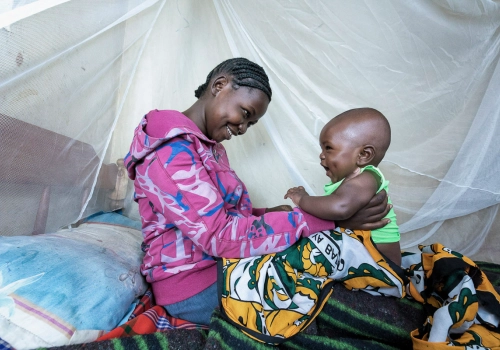
Why coverage, durability and use matter
The MAP analysis highlights the importance of maintaining high coverage and consistent use of ITNs. Sustaining progress against malaria depends on several interconnected factors:
Coverage. High, sustained coverage helps protect vulnerable groups, reduce transmission across communities and support the effectiveness of other malaria prevention interventions. Funding gaps and distribution challenges continue to leave many areas below coverage targets.
Durability. ITNs can only provide protection while they remain intact and their insecticidal properties remain effective. WHO identifies physical and chemical durability as important factors influencing ITN effectiveness, alongside resistance and gaps in access and coverage.
Use. Consistent use is essential for ITNs to deliver protection. A 2025 study in Burkina Faso covering nearly 13,000 nets found that polyester nets were used more frequently than polyethylene nets, suggesting that user preferences may influence net use and, ultimately, protection.
The PermaNet portfolio
Different transmission settings and resistance profiles may require different types of ITNs. The PermaNet portfolio offers WHO-prequalified ITNs designed to support malaria programmes in a range of settings. All are made from soft polyester and designed for durability and consistent insecticidal performance.

PermaNet® Dual
A dual-active ingredient net for areas with pyrethroid resistance

PermaNet® 3.0
A pyrethroid-PBO net for areas with metabolic resistance

PermaNet® 2.0
A pyrethroid-only ITN for areas where mosquitoes remain susceptible
Frequently asked questions
Sources
Malaria Atlas Project. The changing impact of malaria control in Africa 2000–2025. Pre-print, November 2025.
Malaria Atlas Project and IVCC. The changing impact of malaria control in Africa 2000–2025: research summary. November 2025.
Symons T, Gething P. Quantifying 25 years of malaria control impact in Africa. IVCC, 2025.
Pryce J, Richardson M, Lengeler C. Insecticide-treated nets for preventing malaria. Cochrane Database of Systematic Reviews 2018, Issue 11: CD000363.
World Health Organization. WHO publishes recommendations on two new types of insecticide-treated nets. 14 March 2023.
Badolo H, et al. Factors associated with insecticide-treated mosquito nets utilization for malaria prevention in Burkina Faso. Malaria Journal 2025; 24: 374.